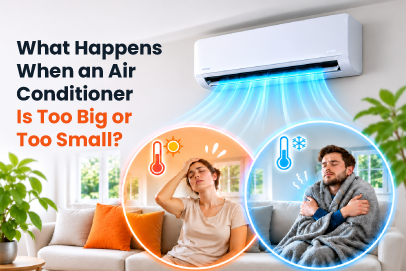
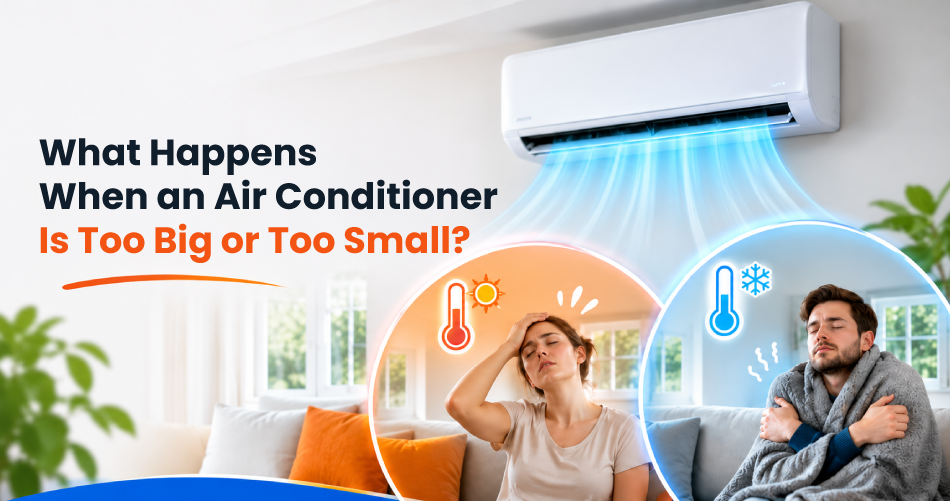
A bigger unit doesn’t automatically mean better comfort. Wrong capacity can cause uneven temperatures, higher running costs, and extra wear. Symptoms like these should be checked by a professional before you blame the size. When choosing an air conditioner, capacity should match the property rather than room area alone.
What Happens When an Air Conditioner Is the Wrong Size?
Short answer for most homes:
- An air conditioner too big may cool quickly but switch off before the room feels consistently comfortable.
- An air conditioner too small may run for long stretches and struggle on very hot days.
- Either way, comfort, energy use and equipment wear can all be affected.
Inverter models change this a bit, because they can ramp their output up and down instead of simply switching on and off. That means symptoms can look different from one system to the next, which is why a proper air conditioner sizing check beats guesswork.
Signs Your Air Conditioner Is Too Big
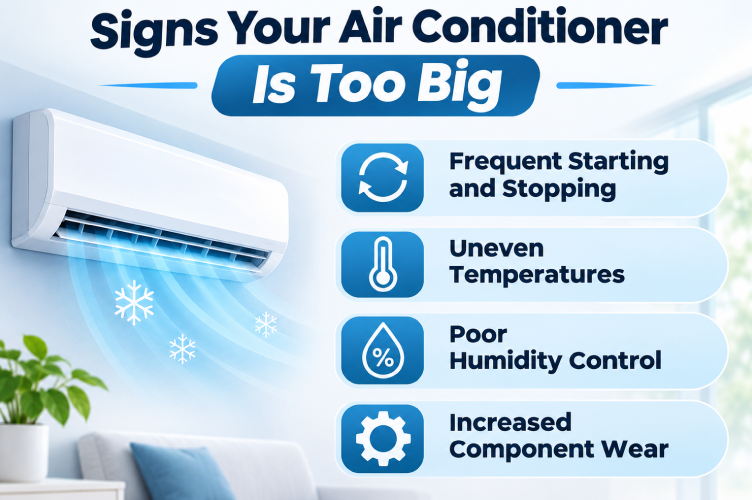
Frequent Starting and Stopping
This is called short cycling. An air conditioner too big for the space hits the set temperature fast, shuts off, then starts again soon after. It may never run long enough to keep the room steady. Common signs:
- The unit clicks on and off every few minutes
- Temperatures swing up and down through the day
- The compressor seems to start far more often than you’d expect
Uneven Temperatures
You might notice it gets cold near the indoor unit while the other side of the room stays uncomfortable. Bedrooms and open-plan living areas often show this first.
Poor Humidity Control
Short cooling cycles can remove less moisture from the air. In humid parts of Australia, the room may feel cool but clammy.
Increased Component Wear
All that extra starting and stopping is one of the possible oversized air conditioner problems, because components can be put under more strain.
Signs Your Air Conditioner Is Too Small
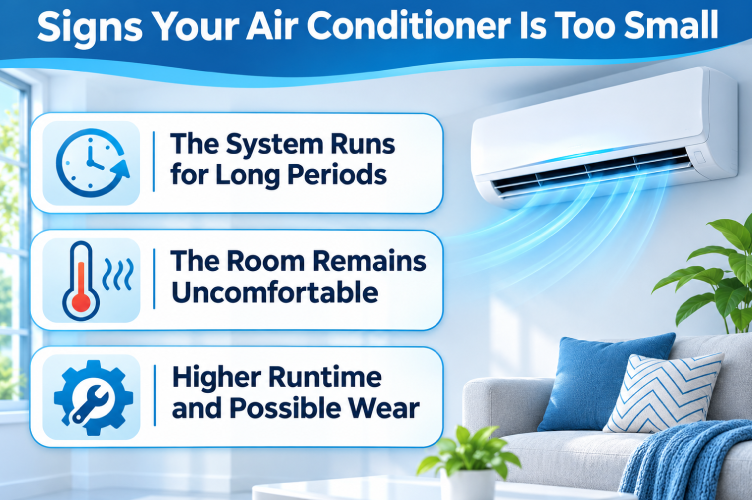
The System Runs for Long Periods
An undersized air conditioner may run almost non-stop while trying to reach the thermostat setting.
The Room Remains Uncomfortable
Watch for:
- Warm spots in the room
- Slow cooling
- Trouble keeping up during the hotter part of the day
Higher Runtime and Possible Wear
Longer operating hours can push up energy use and put more demand on components over time.
Hold on before you blame the size, though. These can cause very similar symptoms:
- Dirty filters
- Poor airflow
- Insulation issues
- A maintenance fault
Oversized vs Undersized Air Conditioner Problems
Factor |
Oversized System |
Undersized System |
Operating pattern |
May start and stop frequently |
May run for extended periods |
Temperature |
Can create uneven temperatures |
May not reach the set temperature |
Humidity |
May remove less moisture |
May struggle during humid conditions |
Energy use |
Short cycling can reduce efficiency |
Long runtimes may increase consumption |
Equipment strain |
More frequent starts |
Extended operation |
Comfort |
Rapid but inconsistent |
Slow or insufficient |
How Correct Air Conditioner Sizing Is Calculated?
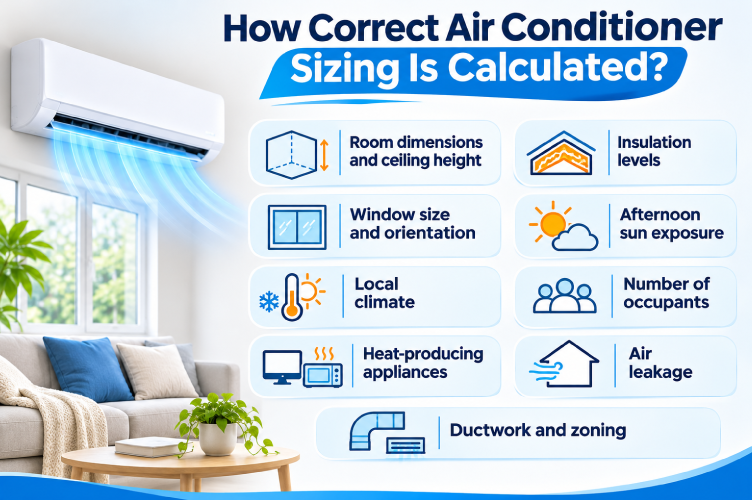
Professional air conditioner sizing for a home looks at a lot more than floor area:
- Room dimensions and ceiling height
- Insulation levels
- Window size and orientation
- Afternoon sun exposure
- Local climate
- Number of occupants
- Heat-producing appliances
- Air leakage
- Ductwork and zoning
One thing that catches people out: cooling capacity in kilowatts is not the same as electrical power consumption. A 7kW cooling unit doesn’t draw 7kW from your power bill. An air conditioner size guide can give you an initial estimate, but it shouldn’t replace a professional heat-load assessment.
What Should You Do If Your System Is the Wrong Size?
Work through these steps in order:
- Check the filters, vents, and thermostat settings.
- Review insulation and look for draughts.
- Arrange an assessment by a qualified technician.
- Skip the DIY modifications. Refrigerant and electrical work need licensed tradespeople.
- Compare repair, replacement and zoning options. Sometimes adding zoning or fixing insulation solves the problem without a new unit.
If replacement is recommended, check whether current air conditioner rebates apply to your state, household, and selected system.
Why Choose HiTech Hot Water?
HiTech Hot Water can assess your property layout, existing equipment and comfort requirements before recommending a suitable air-conditioning capacity and installation approach. We don’t promise guaranteed savings. We’ll help you get the capacity right for your home.

Conclusion
Correct air conditioner sizing supports consistent comfort and sensible operation. Whether you suspect an air conditioner too small for your space or an air conditioner too big for it, arrange a property-specific assessment before you decide.
FAQs
No, excess capacity can cause short cycling, uneven temperatures and reduced humidity control inside the home.
Yes, frequent cycling may increase power use, depending on efficiency, settings, climate and household habits.
It may be undersized, facing extreme weather, poor insulation, restricted airflow or an equipment fault.
Use a professional heat-load assessment covering room dimensions, insulation, windows, orientation, climate and occupancy.
Frequent cycling or continuous operation can increase component wear and potentially shorten the system’s service life.