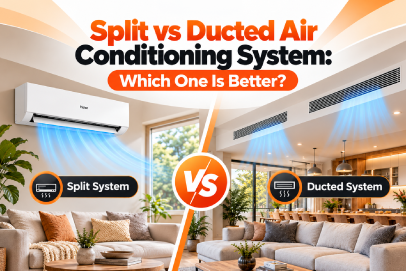
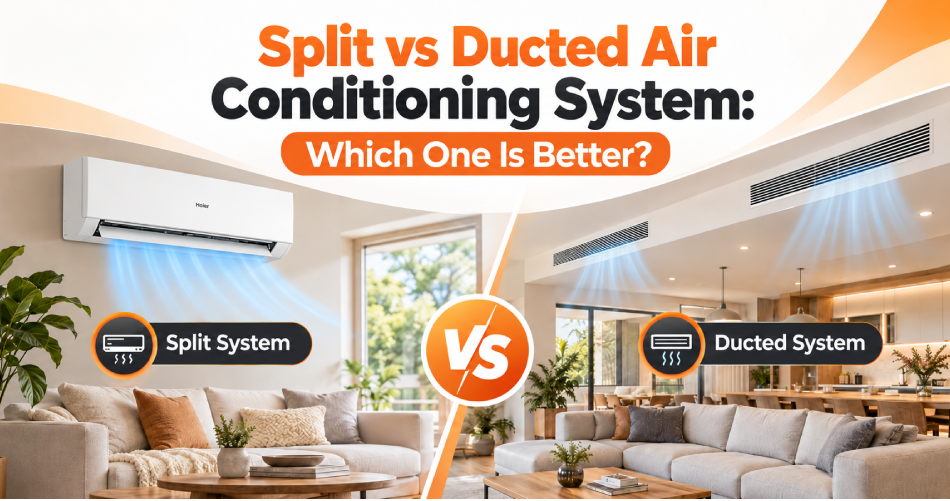
Australian homeowners weighing up split system vs ducted air conditioning usually land here for the same reason, they want to cool or heat their home properly without overspending on something that doesn’t suit the property.
Neither system is automatically better; it depends on your home. Installation cost, coverage, efficiency, appearance and control all pull in different directions depending on what you’re trying to achieve. Before choosing an air conditioner, consider how many rooms you need to heat or cool and how often they are occupied.
What Is a Split Air Conditioning System?
A split air conditioning system usually has an indoor unit mounted on a wall, connected to an outdoor compressor. A few things it generally offers:
- Individual-room heating and cooling
- Relatively straightforward installation
- Independent temperature control for that room
- Good fit for apartments, smaller homes and specific rooms
Not every split system suits every room; a large open-plan living area might need a bigger unit or more than one, and multiple units are often needed if you want coverage across the whole home.
What Is a Ducted Air Conditioning System?
A ducted air conditioning system distributes conditioned air through ducts hidden in the ceiling or under the floor, coming out through discreet vents in each room. It typically offers:
- Whole-home coverage from one system
- Central control, often with optional zoning
- Vents that stay out of sight compared to a wall unit
- A need for suitable ceiling or underfloor space to run the ductwork
This tends to suit larger homes, renovations, and new builds where the ductwork can be planned in from the start.
Split System vs Ducted Air Conditioning Comparison
Here’s how split system vs ducted air conditioning stacks up across the things that actually matter when you’re choosing:
Feature |
Split System |
Ducted System |
Coverage |
Individual rooms or areas |
Multiple rooms or whole home |
Upfront cost |
Generally lower |
Generally higher |
Installation |
Usually less invasive |
Requires ducts and suitable space |
Temperature control |
Separate control for each unit |
Central control with optional zoning |
Appearance |
Indoor unit remains visible |
Mostly discreet vents |
Running costs |
Can target occupied rooms |
Depends heavily on zoning and usage |
Best suited to |
Smaller homes or selected areas |
Larger homes needing broader coverage |
Installation Costs and Important Price Factors
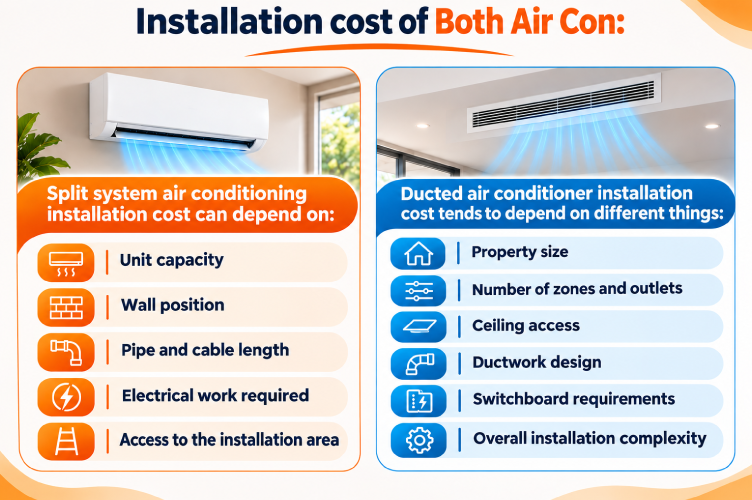
Split system air conditioning installation cost can depend on:
- Unit capacity
- Wall position
- Pipe and cable length
- Electrical work required
- Access to the installation area
As a rough guide, a single split system typically runs somewhere between $1,400 and $6,000 installed, depending on capacity and the complexity of the job.
Ducted air conditioner installation cost tends to depend on different things:
- Property size
- Number of zones and outlets
- Ceiling access
- Ductwork design
- Switchboard requirements
- Overall installation complexity
A whole-home ducted system typically runs from around $8,000 up to $20,000 or more, again depending heavily on the property. These figures are indicative only, not a quote, and installers should confirm exact pricing after assessing your home. Homeowners should also check whether any current air conditioner rebates apply in their state before accepting a quote.
Which System Is More Energy Efficient?
Efficiency really comes down to a combination of things:
- Correct system sizing for the space
- The unit’s energy rating
- How well insulated your home is
- Your local climate
- Thermostat settings
- Whether zoning is used
- Everyday usage habits
- Regular maintenance and servicing
A split air conditioning system may reduce unnecessary running costs by only conditioning the rooms you’re actually using, while a zoned ducted system can manage different areas of a larger home more efficiently than running the whole house at once. Neither option is always cheaper to run, it genuinely depends on how the system is set up and used.
Choosing the Correct Air Conditioner Size
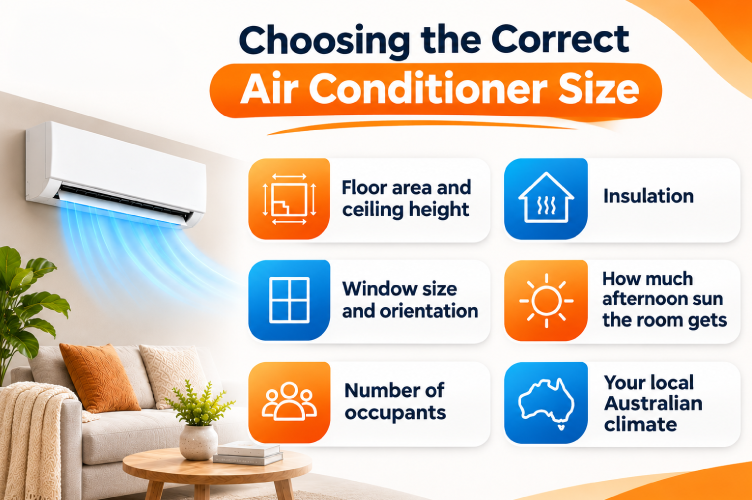
Getting the size right matters more than most people expect. Worth thinking through:
- Floor area and ceiling height
- Insulation
- Window size and orientation
- How much afternoon sun the room gets
- Number of occupants
- Your local Australian climate
Use an air conditioner size guide as a starting point but arrange a professional heat-load assessment before purchasing, since a guide can only get you so close.
Split vs Ducted Air Conditioner: Which Suits Your Home?
Working through split system vs ducted air conditioning for your own home comes down to a quick way of thinking it through. Choose split systems for selected rooms, smaller homes, easier retrofits, or a more limited upfront budget.
Consider ducted systems for larger homes, discreet whole-home coverage, and central zoning. Either way, think about future renovations, ongoing maintenance requirements, and how long you expect to stay in the property before deciding. A property-specific assessment is the best way to settle it properly.

Why Choose HiTech Hot Water?
HiTech Hot Water can assess your home layout, heating and cooling needs, available installation space and budget before recommending a suitable system. We won’t claim to be Australia’s best or promise guaranteed savings, what we can offer is a proper assessment based on your actual home.
FAQs:
A split system generally has a lower upfront cost, while ducted installation requires more equipment, labour and ceiling access.
Not always. Running costs depend on system size, zoning, insulation, thermostat settings, electricity tariffs and daily usage.
One correctly sized unit may serve an open area, but separate rooms usually require additional units for consistent comfort.
It may be possible when sufficient ceiling space, access and electrical capacity are available, subject to a professional assessment.
Yes. Zoned systems can condition selected areas independently, although available controls and capabilities vary between models and installations.
Ducted systems often suit larger homes, but multiple split units may work where duct installation is impractical.