Age alone doesn't tell you whether to replace solar panels. What actually matters is performance, physical condition, safety, compatibility with newer equipment, and whether repair costs still make sense. A professional inspection is the only reliable way to confirm whether solar panel replacement is genuinely needed.
When to Replace Solar Panels?
Working out when to replace solar panels starts with understanding what a warranty actually covers. Many panels carry performance warranties lasting 25 years or longer, but that warranty doesn't guarantee fault-free operation the whole time. There's a real difference between:
- Natural degradation, a slow, expected drop in output over many years
- Sudden or unusual performance loss, which usually points to a fault rather than normal ageing
Climate exposure, how well the system was installed in the first place, ongoing maintenance, and the condition of individual components all affect how long panels actually last in practice.
7 Signs Your Solar Panels May Need Replacing
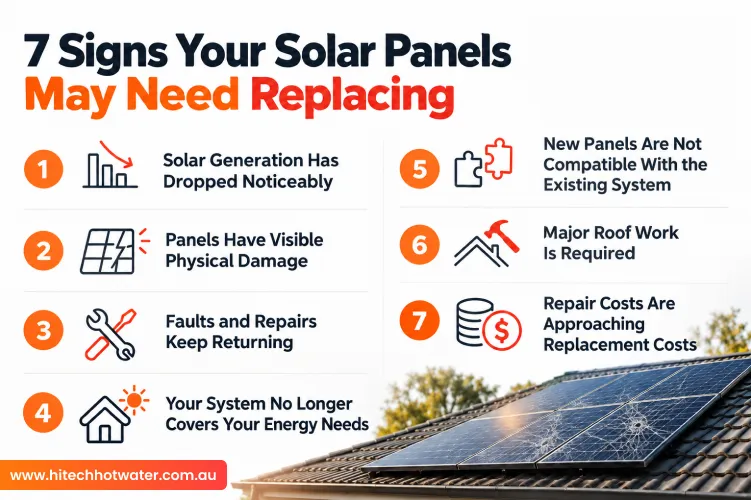
Solar Generation Has Dropped Noticeably
Your monitoring app or portal can reveal a steady decline over weeks or months, not just a one-off dip. Before you get to replacing your solar panels, check the usual suspects:
- Seasonal changes in the weather
- New shade from trees or adjacent construction.
- Dirt, dust, or bird droppings on the panels
- Variations in the level of electricity your home is using
If these are still trending down after accounting for it’s worth getting the system properly inspected.
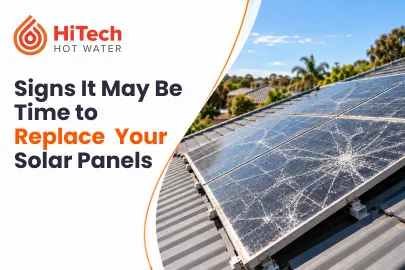
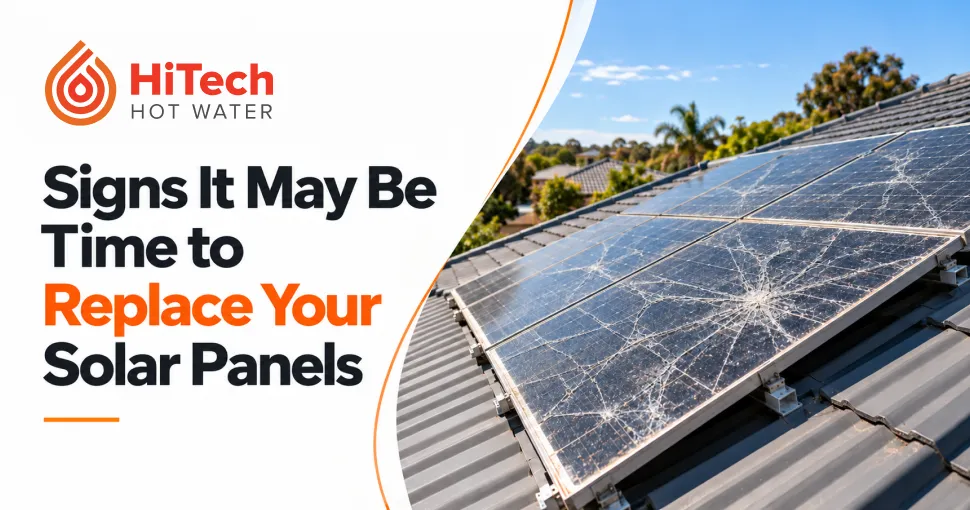
Panels Have Visible Physical Damage
Keep an eye out for:
- Cracked or chipped glass
- Corrosion on frames or connectors
- Discolouration across cells
- Delamination, where layers inside the panel start separating
- Lose connections or signs of moisture getting in
Don't climb onto the roof to check this yourself. A professional inspection is the safer and more accurate way to assess physical damage.
Faults and Repairs Keep Returning
If you're calling a technician every few months for the same ageing array, replacement can end up being more practical than another round of repairs. Repeated callouts add up in both cost and hassle.
Your System No Longer Covers Your Energy Needs
Household electricity use tends to grow over time, through:
- A growing family
- Working from home more often
- Adding a solar battery
- Charging an EV
- Switching to electric appliances like induction cooktops or heat pump hot water
When your existing array can't keep up with any of this, it's a sign the system has outgrown your household, not necessarily that it's faulty.
New Panels Are Not Compatible With the Existing System
If you're thinking about adding panels rather than a full swap, compatibility matters just as much as capacity. Things to check:
- Inverter capacity
- Electrical characteristics between old and new panels
- String design
- Monitoring-system compatibility
Major Roof Work Is Required
Roof repairs or a full roof replacement create a natural opportunity to properly assess your panel array at the same time, rather than removing and reinstalling an ageing system that might need replacing soon anyway.
Repair Costs Are Approaching Replacement Costs
Before you decide to replace solar panels over another repair, it's worth comparing:
- The repair price itself
- How much warranty time is left?
- Expected future performance
- Long-term value of repairing versus replacing
Should You Repair, Upgrade or Replace the System?
|
Option |
When It May Suit |
Main Consideration |
|
Repair |
A minor fault affects an otherwise healthy system |
Confirm parts and labour costs |
|
Upgrade |
More capacity is needed and existing equipment remains compatible |
Check inverter and network limits |
|
Replace |
The array is ageing, damaged or regularly underperforming |
Compare total cost and expected output |
Deciding whether to repair, upgrade, or replace existing solar panels comes down to this table in practice. If a full system swap is on the table, a Residential Solar System built around your current household usage is usually the better long-term option compared to patching up an old array piece by piece.
What to Check Before Replacing Old Solar Panels?
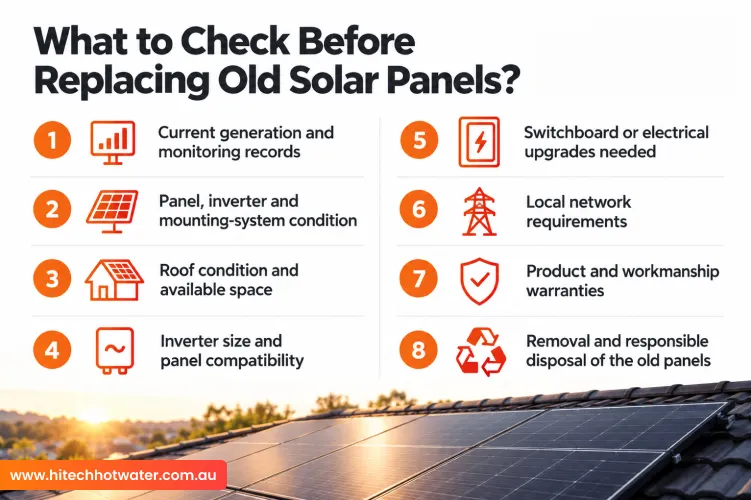
Before replacing old solar panels, it's worth running through:
- Current generation and monitoring records
- Panel, inverter and mounting-system condition
- Roof condition and available space
- Inverter size and panel compatibility
- Switchboard or electrical upgrades needed
- Local network requirements
- Product and workmanship warranties
- Removal and responsible disposal of the old panels
This kind of assessment should be done by a suitably qualified solar professional, not worked out from a quick look at your power bill.
What Affects Solar Panel Replacement Costs?
Several things influence the final price of solar panel replacement:
- Number and wattage of panels
- Roof height, pitch and access
- Removal and disposal of the old system
- Mounting-system changes
- Inverter or switchboard upgrades
- Electrical and compliance work
- Monitoring or battery integration
No one can give you one guaranteed price without inspecting your property first, so treat any quote given over the phone with a grain of salt. Whether you repair or replace solar panels in the end, getting an itemised quote matters either way.
Why Choose HiTech Hot Water?
HiTech Hot Water can assess your system's condition, your household's electricity needs, and equipment compatibility before recommending whether to repair, upgrade or replace. Not every older system needs replacing; sometimes a straightforward repair is genuinely the better call.

Conclusion
Monitoring data, a proper inspection, and a clear cost comparison are what actually tell you whether to repair, upgrade or replace your solar panels. Get a quote and assessment today.
FAQs
Yes, if a compatible panel is available and the remaining modules, wiring and mounting systems are serviceable.
Sometimes, an installer must confirm voltage, current, capacity, and string-design compatibility before connecting newer panels.
Not always, Consider its age, condition, warranty, efficiency and compatibility with the proposed replacement panels.
Possibly. Requirements depend on your electricity distributor, inverter capacity, connection agreement, and the extent of the proposed changes.
Removed panels should be assessed for reuse, recycling, or responsible disposal through an appropriate solar waste service.