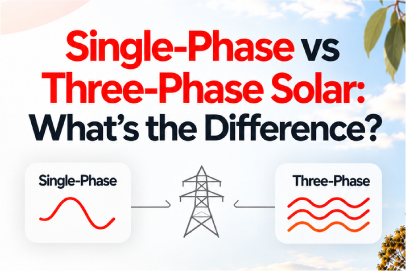
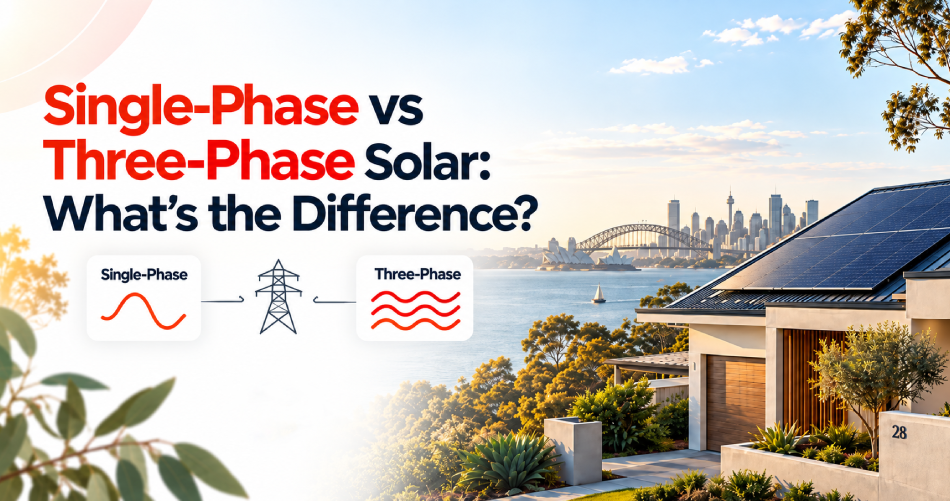
Single-Phase VS Three-Phase electricity supply is one of the first things that shapes what solar system a property can actually install. Your inverter connects the solar panels to your home, and it has to match how power comes in.
The two setups differ in system capacity, how power is distributed, and cost, and the rules vary depending on which network area you're in. The good news: most homeowners don't need to upgrade their electricity supply just to go solar.
What Is the Difference Between Single-Phase and Three-Phase Solar?
Here's how the two connections differ at a basic level:
- A Single-Phase Solar System usually connects to a property where power comes in through three wires
- A Three-Phase Solar System connects where power comes in through five wires instead, spreading the load across three separate phases
- Solar panels produce DC electricity either way
- The inverter's job is converting that DC electricity into the AC electricity your home actually uses
- The inverter has to be compatible with your property's connection type
- Phase type has no effect on how much sunlight reaches your panels
Single Phase vs Three Phase Solar Comparison
Single-Phase VS Three-Phase comes down to more than just wiring. A Single-Phase Solar System and a Three-Phase Solar System differ across several practical points, summarized here:
|
Feature |
Single-Phase |
Three-Phase |
|
Electricity connection |
One phase |
Three phases |
|
Supply wires |
Three (including neutral and earth) |
Five (including neutral and earth) |
|
Inverter type |
Single-phase inverter |
Three-phase inverter |
|
Suitable system sizes |
Often smaller residential systems |
Often larger residential and commercial systems |
|
Power distribution |
Delivered on one phase |
Spread across three phases |
|
Large-appliance suitability |
Can suit most homes |
Often better for heavier loads |
|
Network approval |
Still required |
Still required |
|
Export limitations |
Set by local network |
Set by local network |
|
Installation cost |
Generally lower |
Can be higher |
|
Best-suited household |
Standard homes with moderate use |
Larger homes or higher electrical loads |
Keep in mind the actual inverter size and export limit for your address are set by your local distribution network, not by this table.
How do Single-Phase and Three-Phase Solar Inverters Work?
What Is a Single Phase Solar Inverter?
A single-phase solar inverter sends converted AC electricity through one phase. It's required for properties with a single-phase connection, and it's often suitable for smaller residential systems. Even so, the system capacity a single phase solar inverter can run at still depends on what your local network approves, not just the inverter's own rating.
What Is a Three Phase Solar Inverter?
A three-phase solar inverter will divide its output equally amongst all three phases at the same time, which can help to balance generation more evenly across the connection of the property. It's often considered for larger residential systems, and may suit homes with substantial electrical loads. A three phase solar inverter still needs network approval before it can be connected, the same as any other setup.
Which Solar Setup Is Better for Your Australian Home?
There's no single answer to Single-Phase VS Three-Phase, since a Single-Phase Solar System suits plenty of homes just fine, while a Three-Phase Solar System, run through a three-phase solar inverter, tends to suit others better. It depends on:
- Your current property connection
- The solar-system capacity you're after
- Your household's power usage
- Air conditioning
- A pool or spa
- EV charging
- Heat-pump hot water
- Battery installation plans
- Future home electrification
Three-phase isn't automatically better or more efficient; it's simply a different setup that suits different loads.
How Can Phase Type Affect System Size and Solar Exports?
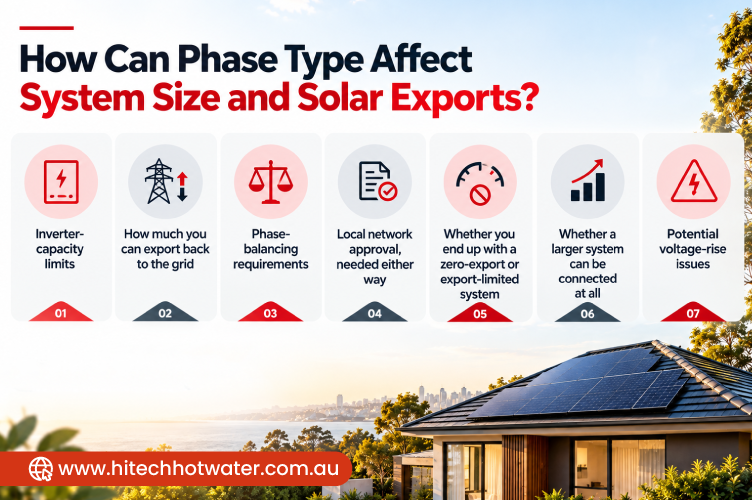
Phase type plays into a few things:
- Inverter-capacity limits
- How much you can export back to the grid
- Phase-balancing requirements
- Local network approval, needed either way
- Whether you end up with a zero-export or export-limited system
- Whether a larger system can be connected at all
- Potential voltage-rise issues
These rules genuinely differ between Australian distribution networks, so it's worth checking requirements using your actual property address and postcode before accepting a quote.
Does Single-Phase or Three-Phase Solar Cost More?
Searching for a single-phase solar panel price or a three-phase solar panel price can be a bit misleading, since solar panels themselves aren't phase-specific. The real cost drivers are:
- Inverter type and capacity
- Number and quality of panels
- Condition of your switchboard
- Smart-meter requirements
- Additional cabling
- The network-connection application
- Installation complexity
- A single-to-three-phase property upgrade, if your property needs one
There's no single national figure for any of this, since it comes down to your specific property and network.
How to Check Whether Your Home Has Single-Phase or Three-Phase Power?
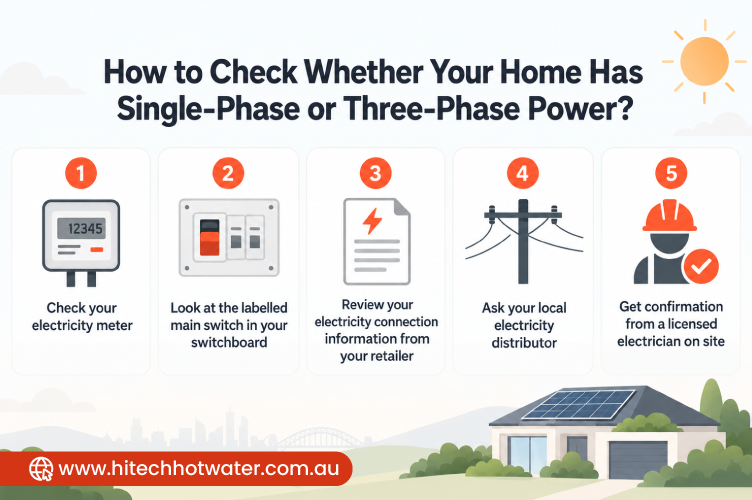
A few ways to find out:
- Check your electricity meter
- Look at the labelled main switch in your switchboard
- Review your electricity connection information from your retailer
- Ask your local electricity distributor
- Get confirmation from a licensed electrician on site
Don't remove switchboard covers or touch any electrical wiring yourself to check.
Why Choose HiTech for Your Solar Installation?
HiTech Hot Water assesses your existing electricity connection before recommending a Residential Solar System, sizing it around your actual household usage and suggesting an inverter that suits your property. The team provides network and grid connection support, uses quality products and installs through SAA-accredited installers. Pricing is transparent from the start, and there’s ongoing after-sales support once your system is up and running.

Conclusion
Choosing between Single-Phase VS Three-Phase depends on your existing electricity connection, the size of the system you need, inverter compatibility, the limitations of your local network, and the future of your household’s power consumption. Get a customized solar and connection assessment before you sign up.
FAQs:
Not always, it depends on inverter capacity, your existing electricity supply, local network limits, and the distributor’s connection approval requirements.
Yes, this may be permitted. However, the installer must assess phase balance, inverter capacity, export limits, and local network connection requirements.
No, generation depends mainly on panel capacity, sunlight, roof orientation, shading, temperature and system losses, rather than the property’s phase type.
Three-phase power can support higher charging rates and larger loads, but suitability depends on equipment compatibility, network rules and household demand.
It may suit larger solar systems, EV chargers, or heavy appliances. Compare the upgrade cost with your expected capacity and future energy needs.