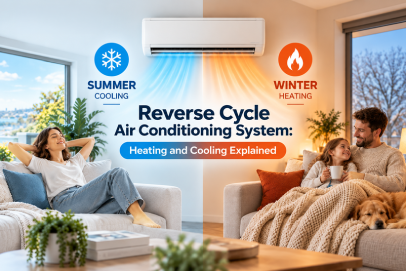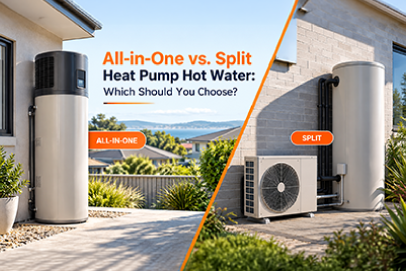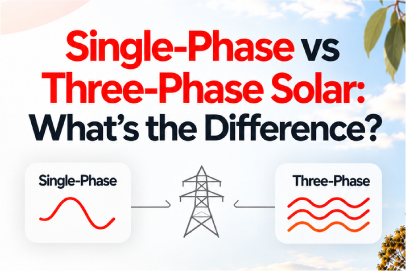
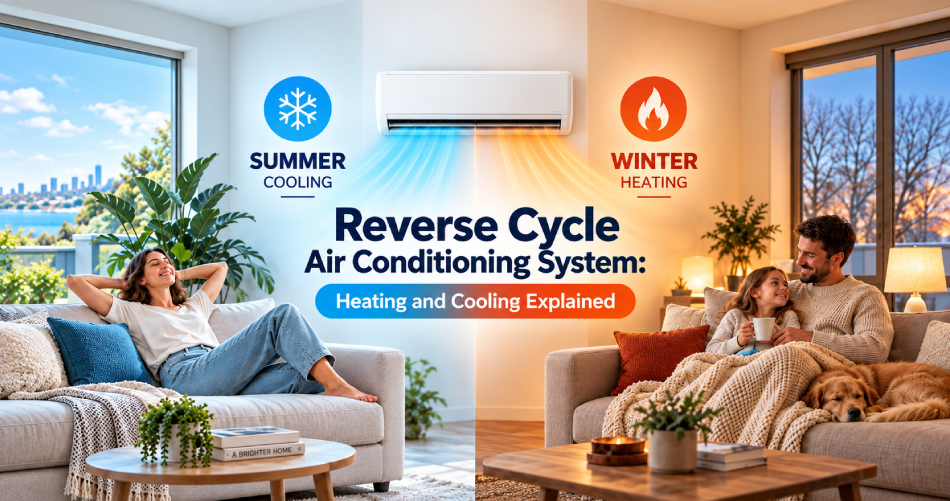
A reverse cycle air conditioning system is an electric heat pump that provides both heating and cooling from the one unit. Rather than generating heat or cold directly, a reverse cycle air conditioner moves heat from one place to another. Choosing the right one for your home comes down to system type, capacity, efficiency, installation and ongoing running costs.
How Does a Reverse Cycle Air Conditioning System Work?
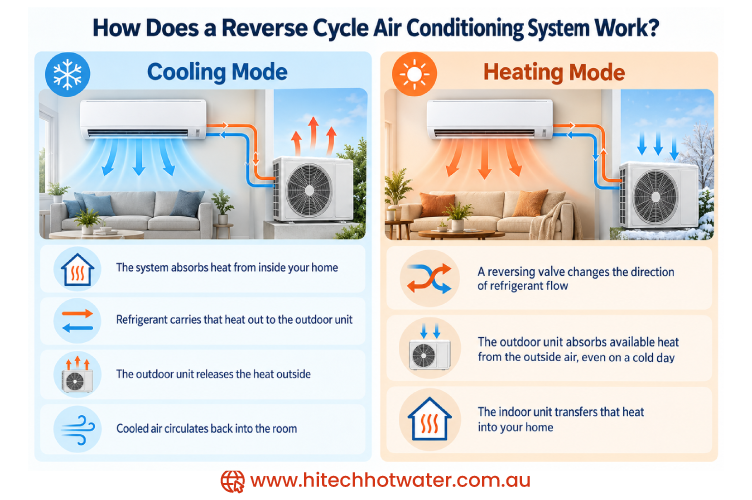
Cooling Mode:
- The system absorbs heat from inside your home
- Refrigerant carries that heat out to the outdoor unit
- The outdoor unit releases the heat outside
- Cooled air circulates back into the room
Heating Mode:
- A reversing valve changes the direction of refrigerant flow
- The outdoor unit absorbs available heat from the outside air, even on a cold day
- The indoor unit transfers that heat into your home
It sounds odd, but a reverse cycle air conditioning system can pull usable heat out of outdoor air even when it feels genuinely cold outside. This lines up with the Australian Government's own heating and cooling guidance.
|
Reverse Cycle Heating and Cooling |
Cooling Mode |
Heating Mode |
|
Refrigerant flow direction |
Heat moves indoors to outdoors |
Heat moves outdoors to indoors |
|
Where heat ends up |
Released outside |
Delivered inside |
|
Key component |
Standard refrigerant cycle |
Reversing valve redirects flow |
Types of Reverse-Cycle Systems for Australian Homes
- Wall-mounted split system: designed to condition an individual room or open living area
- Multi-split system: connects several indoor units to one outdoor unit
- Ducted system: distributes conditioned air through ceiling or floor ducts across the home
Zoning is worth thinking about for larger homes, since it lets you condition only the rooms in use. The right air conditioner configuration depends on whether you need to condition one room, several rooms, or most of the home.
Choosing a Reverse Cycle Air Conditioner for Home
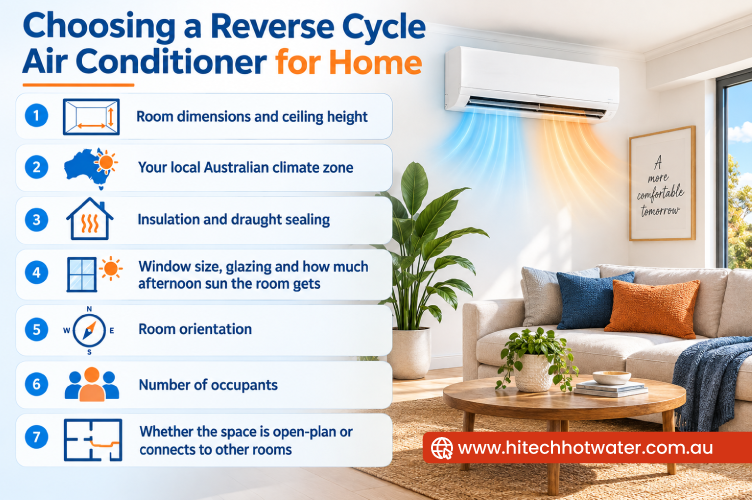
Sizing a reverse cycle air conditioning system correctly takes more than just floor area into account:
- Room dimensions and ceiling height
- Your local Australian climate zone
- Insulation and draught sealing
- Window size, glazing and how much afternoon sun the room gets
- Room orientation
- Number of occupants
- Whether the space is open-plan or connects to other rooms
The air conditioner size guide explains how these room conditions can affect the capacity you actually need. An installer should still confirm the final size through a property-specific assessment before you buy anything.
Benefits and Limitations of Reverse Cycle Heating and Cooling
Weighing up reverse cycle heating and cooling against other options comes down to a few clear pros and cons.
Benefits:
- One appliance covers both summer and winter
- Efficient heat-transfer technology rather than generating heat from scratch
- Available as individual room units or whole-home ducted systems
- Inverter models adjust output as conditions change, rather than switching on and off
- Zoning can reduce conditioning of rooms nobody's using
Limitations:
- Upfront purchase and installation costs
- Outdoor-unit noise and placement restrictions to work around
- Performance varies quite a bit by model and climate
- Poorly designed ductwork can lose conditioned air along the way
What to Expect From Reverse Cycle Air Conditioner Installation?
An installer should assess:
- Indoor and outdoor unit position
- Airflow and service clearances
- Refrigerant pipe route
- Condensate drainage
- Electrical supply and switchboard capacity
- Outdoor-unit noise and impact on neighbouring properties
- Wall, ceiling or roof access
- Local installation requirements
Refrigerant work is not a DIY job, it requires an appropriately licensed technician. Australian Government guidance recommends checking an installer's ARCtick credentials before any reverse cycle air conditioner installation goes ahead.
What Does Reverse Cycle Air Conditioning Cost in Australia?
Reverse cycle air conditioning cost depends on system capacity, brand, configuration, and how complex the installation is.
|
System Type |
Typical Application |
Indicative Supply and Installation (AUD) |
|
Small single split |
Bedroom or small room |
$1,400* – $3,000* |
|
Medium or large split |
Living area or open-plan room |
$2,500* – $6,000+* |
|
Multi-head split |
Several rooms |
$4,000* – $12,000+* |
|
Ducted reverse cycle |
Most or all of the home |
$8,000*– $20,000+* |
Indicative Australian pricing only, not a quote. Final prices depend on capacity, brand, location, pipework, electrical upgrades, access, zoning and site conditions.
A proper reverse cycle air conditioner installation quote should spell out:
- Equipment and labour
- Standard pipework and electrical work
- Switchboard upgrades or extra circuits
- Additional ducting or zoning
- Removal of the existing system
Understanding Reverse Cycle Air Conditioning Efficiency
How efficiently a reverse cycle air conditioning system runs comes down to a handful of things worth comparing side by side:
- Heating and cooling star ratings
- The Zoned Energy Rating Label for your climate zone
- Whether you're in a hot, average or cold Australian climate zone
- Rated capacity in kilowatts
- Estimated annual electricity consumption
- Indoor and outdoor noise ratings
- Inverter operation and zoning capability
A correctly sized reverse cycle air conditioner generally performs better than one that's oversized or undersized for the room. The Australian Government recommends using the climate-specific Zoned Energy Rating Label when comparing models, and YourHome also flags correct sizing as important for both energy use and comfort.
Reverse Cycle Air Conditioning Maintenance
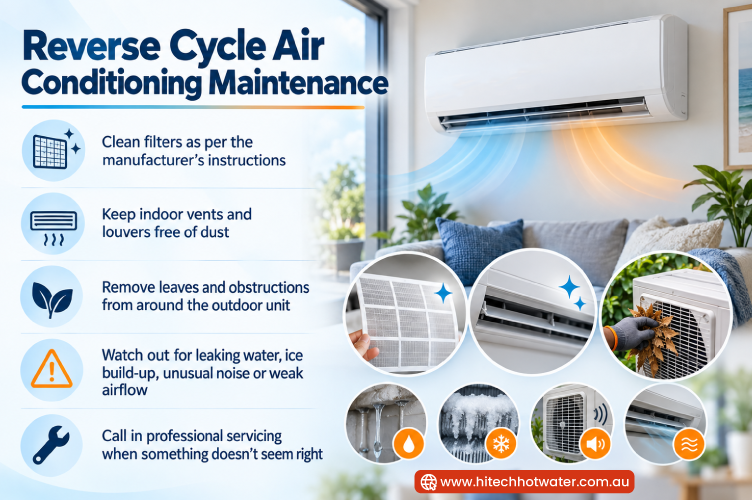
It’s not difficult to stay on top of reverse cycle air conditioning maintenance:
- Clean filters as per manufacturer’s instructions
- Keep indoor vents and louvers free of dust
- Remove leaves and obstructions from around the outdoor unit
- Watch out for leaking water, ice build-up, unusual noise or weak airflow
- Call in professional servicing when something doesn’t seem right
Regular reverse cycle air conditioning maintenance supports reliable operation and may help avoid unnecessary energy losses over time.

Why Choose HiTech for Air Conditioning?
Before you get your final air conditioner quote, HiTech Hot Water will do a customized assessment to confirm your system's capacity, product selection, location and installation needs. They’ll guide you through the products and coordinate professional installation, and they’ll be there to support you once your system is up and running.
FAQs
Not necessarily. Consumption depends on climate, thermostat settings, system efficiency, insulation, and how long the unit operates.
Yes, many modern units work in cold weather, but performance depends on the model’s rated operating temperature.
Split systems suit individual rooms, while ducted systems provide broader coverage and may offer zoning for better control.
Sizing depends on room area, ceiling height, climate, insulation, windows, and orientation. A professional assessment is most accurate.
Follow the manufacturer’s schedule, often annually. Arrange an earlier inspection if airflow, performance, noise or leakage changes.