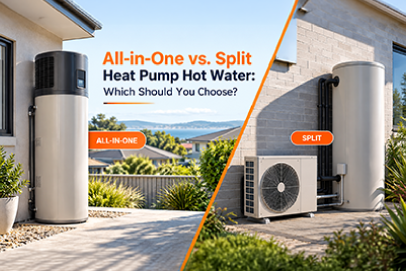
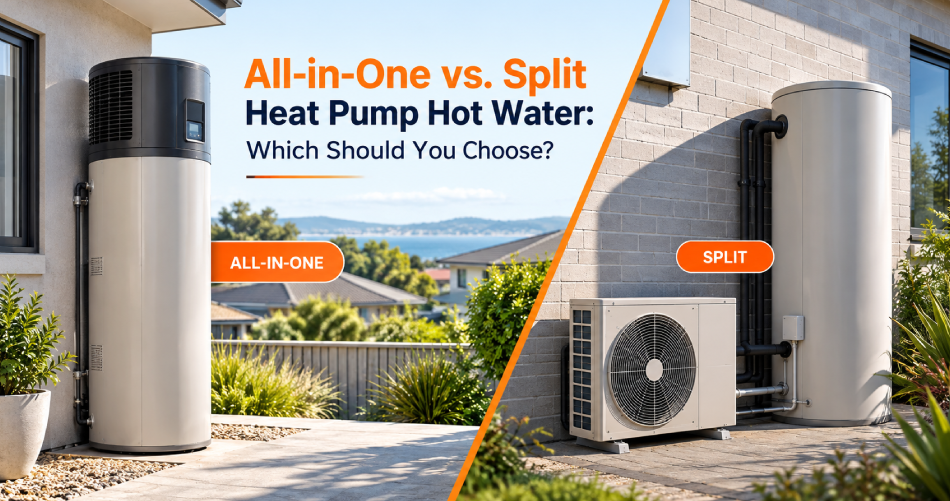
When it comes to hot water, all in one vs split heat pump really comes down to component layout, placement flexibility, pipework, where the noise sits, and what the installation actually involves. This isn't about space heating, just hot water systems. Neither configuration is automatically the right call for every home; it depends on your property.
How do the Two Heat Pump Designs Work?
How an All-in-One Heat Pump Works?
An all in one heat pump combines the storage tank, compressor, evaporator and fan into a single unit. Everything installs in one location, and the design tends to be taller than a split system. Even though it's one unit, it still needs:
- Suitable airflow around the unit
- Proper drainage for condensate
- An adequate electrical supply
- Clear access for servicing
How a Split Heat Pump Works?
A split heat pump separates the storage tank from the outdoor heat pump unit, installing them in different spots. The connection between the two may carry refrigerant or water, depending on the model. Manufacturers set a maximum distance allowed between the tank and the outdoor unit, so that's worth checking before you plan the layout.
All-in-One vs Split Heat Pump: Technical Comparison
Here's how all in one vs split heat pump options stack up on paper, though actual specifications need to be compared model by model:
|
Feature |
All-in-One |
Split |
|
Component arrangement |
Combined in one unit |
Tank and outdoor unit separate |
|
Tank and compressor location |
Same location |
Different locations |
|
Unit height |
Typically, taller |
Tank and outdoor unit both lower profile |
|
Airflow requirements |
Around the single unit |
Mainly around the outdoor unit |
|
Noise-source location |
At the tank |
Can be positioned away from the tank |
|
Connecting pipework |
Minimal |
Refrigerant or water line between components |
|
Maximum separation distance |
Not applicable |
Set by manufacturer |
|
Indoor tank suitability |
Not typically indoors |
Tank can often go indoors or sheltered |
|
Access for servicing |
Single location |
Two locations to access |
What Changes During Heat Pump Hot Water Installation?
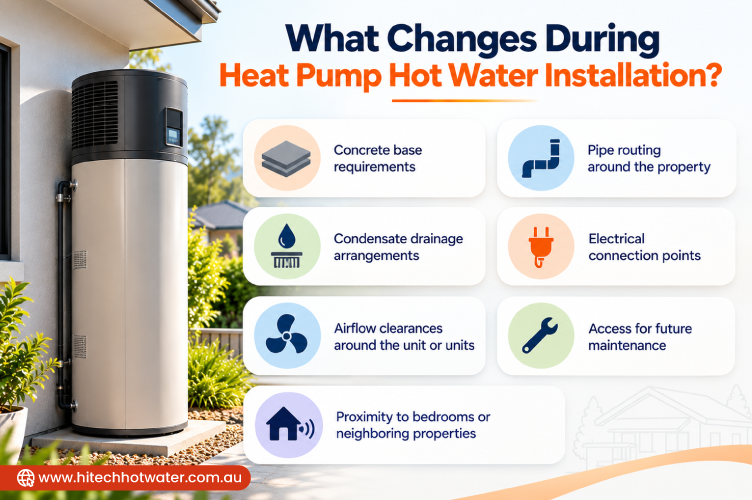
Your heat pump hot water installation looks a bit different depending on which side of all in one vs split heat pump you land on. Things that shift include:
- Concrete base requirements
- Pipe routing around the property
- Condensate drainage arrangements
- Electrical connection points
- Airflow clearances around the unit or units
- Access for future maintenance
- Proximity to bedrooms or neighbouring properties
A split design needs a suitable route between the tank and the outdoor unit, which isn't always straightforward on every block. Whatever you choose, heat pump hot water installation should be carried out by appropriately licensed Australian tradespeople, following the manufacturer's instructions.
Performance, Efficiency and Climate Conditions
Configuration alone doesn't determine how well an all in one heat pump or a split-system design performs. What actually matters is COP, recovery time, how often the booster element kicks in, ambient temperature, incoming water temperature, and how much heat the tank loses over time.
Efficiency figures are only meaningful when compared under similar test conditions, not pulled from different climates or seasons. Where the unit sits can also affect the air temperature, it has to work with, which feeds back into performance.
Does One Design Cost More to Install?
Total installed cost is about more than just what design you choose: The specific model and tank capacity Pipe distances for split systems Electrical work required Site access and complexity A new concrete base, switchboard work or relocating existing plumbing can all add to the price. It's worth comparing complete installed quotes rather than equipment prices alone, since a cheaper unit can still end up costing more once installation is factored in.
Noise, Space and Placement Differences
An all in one heat pump places its fan and compressor near the top of the tank, so that's where the noise comes from. A split-system's outdoor unit can sometimes be positioned lower or further from living areas, within the manufacturer's connection limits. A few things worth thinking through:
- Airflow clearance around the unit
- Boundary clearance requirements
- Distance from windows and bedrooms
- Impact on neighbouring properties
Not every split design will be quieter than every all-in-one, so it comes down to the specific models being compared.
Maintenance, Servicing and Replacement
Ongoing maintenance means access to a few key parts:
- The fan
- The evaporator coil
- The condensate drain
- The tank
- Electrical components
Repair and replacement options depend on the system design, the warranty, and whether spare parts are readily available. It's worth checking tank, compressor and labour warranty terms separately, since they don't always run for the same length of time.
Which Design Is Better for Your Australian Home?
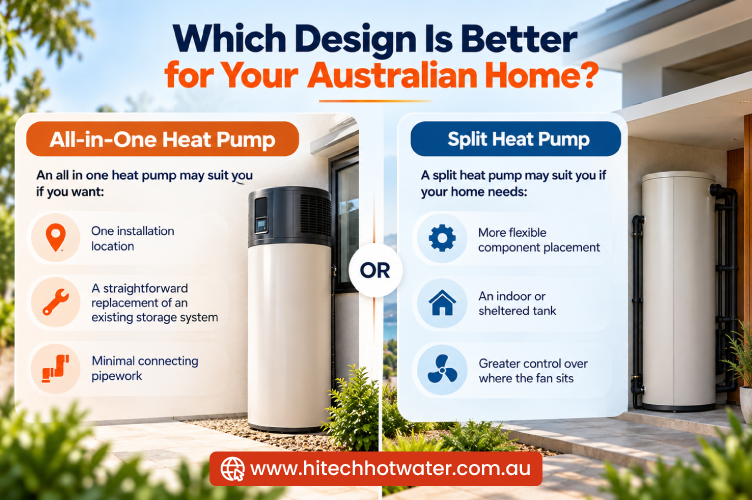
Deciding all in one vs split heat pump for your own place comes down to what you need day to day. An all in one heat pump may suit you if you want:
- One installation location
- A straightforward replacement of an existing storage system
- Minimal connecting pipework
A split heat pump may suit you if your home needs:
- More flexible component placement
- An indoor or sheltered tank
- Greater control over where the fan sits
A property-specific assessment is the best way to know which fits your home.

Why Choose HiTech Hot Water?
HiTech Hot Water assesses your household usage, available space, local climate and existing services before recommending a Heat Pump Hot Water system, whichever way the all in one vs split heat pump decision lands for your property. Installation is carried out by appropriately qualified installers, with product selection based on your property and after-sales support available once your system is running.
FAQs
Often, but not always. Installation depends on the existing plumbing, electrical supply, level base, site access, and required airflow clearances.
It can be if the outdoor unit is positioned away from the bedrooms. Actual noise depends on the model, location and installation quality.
Neither is automatically more efficient. Performance depends on the model, climate, placement, controls, household usage, and operating conditions.
Some split systems allow indoor tank installation, provided drainage, ventilation, service access, and all manufacturer and plumbing requirements are met.
Maximum pipe length and height difference vary by model. Your installer must follow the manufacturer’s specified separation and elevation limits.