Winter often means longer showers, hotter water temperatures, and increased household energy use. As temperatures drop across Australia, many homeowners notice a rise in winter hot water demand, especially in family homes where multiple people use hot water during the morning and evening peaks.
This naturally leads to a common question: can a heat pump hot water in winter keep up when demand is at its highest?
The good news is that modern heat pump systems are specifically designed to operate efficiently throughout the year, including colder months. While performance can vary depending on temperature and system size, today's advanced units are built to provide reliable hot water even during winter.
Can a Heat Pump Hot Water System Handle High Winter Demand?
Quick Answer
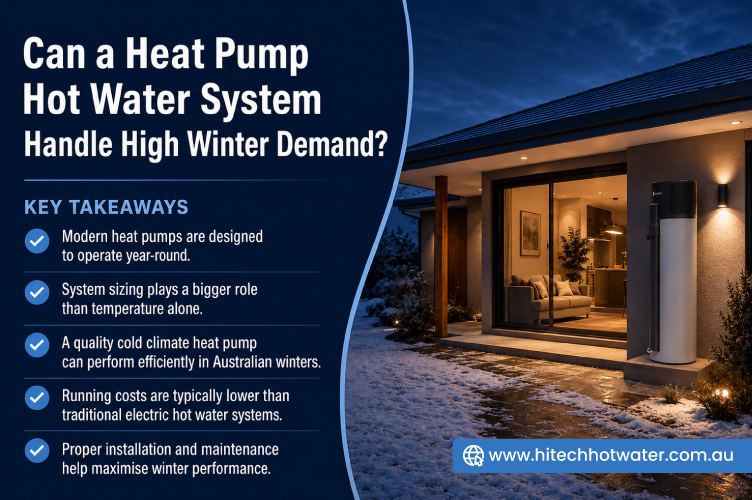
Yes, A properly sized heat pump hot water in winter can comfortably handle high household demand, even during colder months.
Key Takeaways
- Modern heat pumps are designed to operate year-round.
- System sizing plays a bigger role than temperature alone.
- A quality cold climate heat pump can perform efficiently in Australian winters.
- Running costs are typically lower than traditional electric hot water systems.
- Proper installation and maintenance help maximise winter performance.
Why Hot Water Demand Increases During Winter?
As temperatures fall, people naturally use more hot water for:
- Longer showers
- Hotter shower temperatures
- Increased laundry loads
- Additional household cleaning
This increased usage contributes directly to higher winter season hot water demand in many Australian homes.
Which Homes Experience the Highest Winter Season Hot Water Demand?
The highest winter hot water demand is often seen in:
- Families with children
- Multi-generational households
- Homes with multiple bathrooms
- Properties in colder regions
These households place greater pressure on hot water systems during peak periods.
How Heat Pump Hot Water Systems Work During Winter?
Where Heat Pumps Get Their Energy From?
A heat pump extracts thermal energy from the surrounding air and transfers it into water stored within the tank.
Unlike traditional electric systems that generate heat directly, Heat Pump Hot Water systems move heat rather than create it, making them significantly more efficient.
Do Heat Pumps Still Work in Cold Weather?
Yes. Modern systems designed for heat pump hot water in winter operation can continue extracting heat even when outdoor temperatures drop significantly.
Many units are specifically engineered as cold climate heat pump solutions and can operate effectively in cooler Australian regions.
Why Heat Pumps Are Different From Traditional Electric Systems?
Traditional electric systems rely on resistance heating, which consumes large amounts of electricity.
Heat pumps use far less energy because they transfer existing heat, resulting in lower operating costs and better efficiency.
Does Cold Weather Affect Heat Pump Efficiency?
Understanding Heat Pump Efficiency in Cold Climate Conditions Like any heating technology, performance changes slightly as temperatures fall.
However, modern manufacturers have significantly improved heat pump cold weather efficiency, allowing systems to continue operating effectively even during winter.
What Happens When Temperatures Drop?
As temperatures decrease:
- The compressor may work harder
- Heating cycles may take slightly longer
- Recovery times can increase marginally
Despite this, strong heat pump efficiency in colder climate conditions allows most modern systems to maintain reliable performance.
Can Heat Pumps Still Deliver Reliable Hot Water?
Absolutely, While heat pump cold weather efficiency may reduce slightly during colder periods, a properly sized system will still provide consistent hot water for normal household needs.
Can a Cold Climate Heat Pump Keep Up with High Winter Demand?
Performance in Mild Australian Winters
In most parts of NSW, QLD, and coastal regions, a cold-climate heat pump operates very efficiently throughout winter.
Temperature fluctuations are generally not severe enough to significantly impact performance.
Performance in Colder Regions Like Victoria, Tasmania and Canberra
In cooler locations, selecting a purpose-built cold-climate heat pump becomes more important.
These systems are designed to maintain strong heat pump efficiency in colder climate environments and continue producing reliable hot water during colder mornings and nights.
Factors That Affect Winter Performance
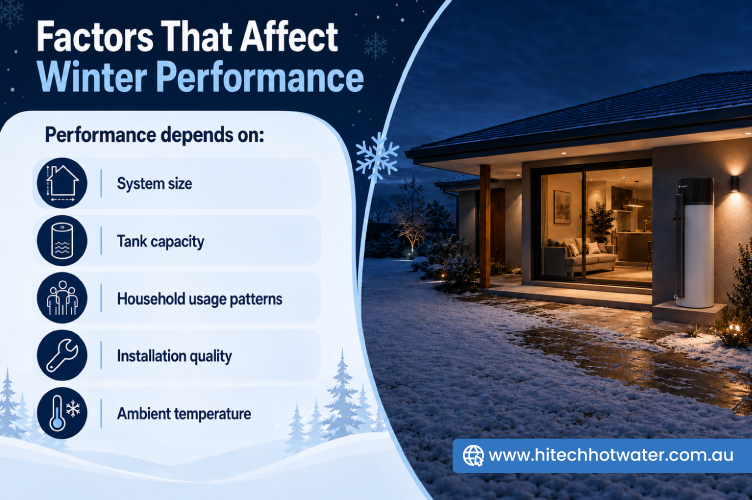
Performance depends on:
- System size
- Tank capacity
- Household usage patterns
- Installation quality
- Ambient temperature
In most cases, sizing is a bigger factor than climate alone.
Heat Pump Usage in Winter: What Homeowners Should Expect
Recovery Time After Heavy Hot Water Use
Following multiple showers or high usage periods, heat pump usage in winter may result in slightly longer recovery times than during summer.
However, modern systems are designed to recover efficiently and maintain household comfort.
Running Costs During Winter
Although usage increases during colder months, heat pump usage in winter remains significantly more efficient than conventional electric storage systems.
Does Winter Increase Electricity Consumption?
Some increase is normal because:
- Hot water demand rises
- Water entering the system is colder
- Heating cycles may run longer
Even so, heat pump usage in winter typically remains highly economical.
Common Myths About Heat Pumps during Winter
Myth: Heat pumps stop working in winter.
Reality: Modern Heat Pumps during Winter continue operating effectively in Australian climates.
Myth: Heat pumps are only suitable for warm regions.
Reality: Many systems are specifically engineered as cold-climate heat pump solutions.
Choosing the Right Heat Pump Size for High Winter Demand
Recommended Tank Sizes for Different Household Sizes
|
Household Size |
Recommended Tank |
|
1-2 people |
180-200L |
|
3-4 people |
250-300L |
|
5-6 people |
300-400L |
Signs Your Current System May Be Too Small
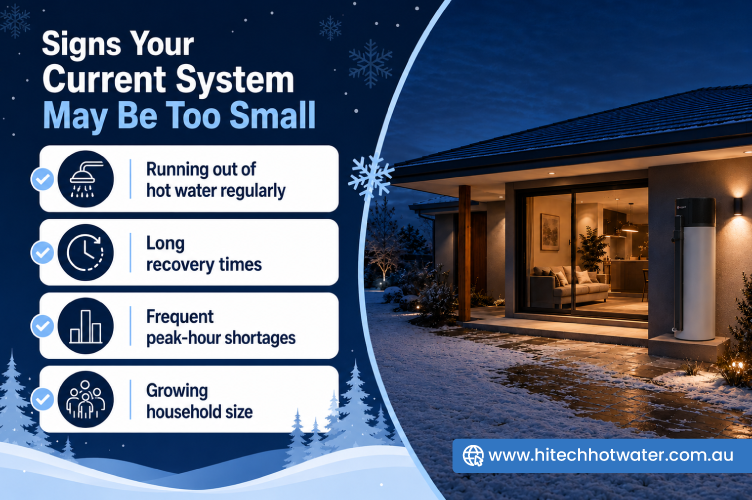
- Running out of hot water regularly
- Long recovery times
- Frequent peak-hour shortages
- Growing household size
Why Proper Sizing Matters More Than Winter Temperatures?
The correct hot water system size often determines performance more than weather conditions.
A properly sized system can comfortably meet demand even when heat pump hot water in winter usage increases significantly.
Heat Pumps in Winter vs Electric and Gas Hot Water Systems
Running Cost Comparison
|
System Type |
Running Cost |
Efficiency |
|
Heat Pump |
Low |
High |
|
Electric Storage |
High |
Moderate |
|
Gas Hot Water |
Moderate |
Moderate |
Energy Efficiency Comparison
Modern heat pumps deliver significantly higher efficiency compared with conventional electric systems.
Which System Performs Better During Peak Demand?
When correctly sized, Heat Pumps in Winter can handle peak household demand while maintaining lower operating costs than many traditional alternatives.
Simple Ways to Maximise Heat Pump Performance During Winter
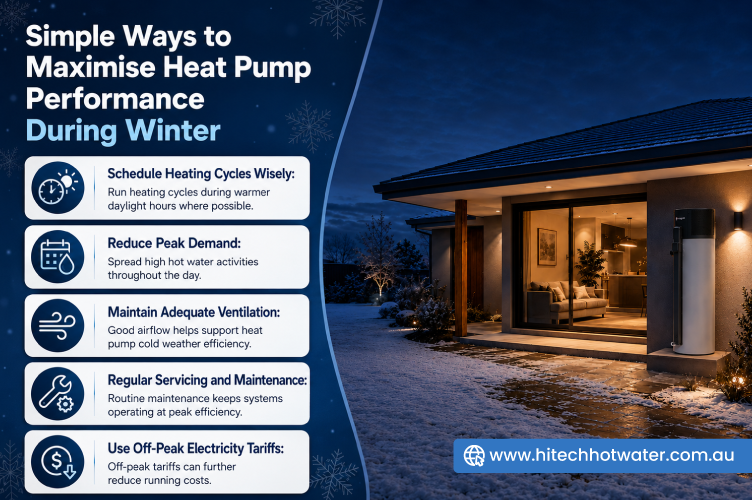
Schedule Heating Cycles Wisely
Run heating cycles during warmer daylight hours where possible.
Reduce Peak Demand
Spread high hot water activities throughout the day.
Maintain Adequate Ventilation
Good airflow helps support heat pump cold weather efficiency.
Regular Servicing and Maintenance
Routine maintenance keeps systems operating at peak efficiency.
Use Off-Peak Electricity Tariffs
Off-peak tariffs can further reduce running costs.
Real-Life Example: How a Family of Four Handles Winter Season Hot Water Demand
Consider a family of four using a properly sized 300L heat pump system.
Despite increased showers, laundry usage, and higher winter hot water demand, the system continues providing reliable hot water throughout the day.
Because the unit was selected based on household requirements rather than minimum capacity, performance remains consistent even during colder months.
This demonstrates how system sizing is often the key factor behind successful heat pump hot water in winter performance.
When Should You Upgrade to a Larger Heat Pump System with HiTech Hot Water?
Choosing the right system size is essential for consistent performance and long-term energy savings. HiTech Hot Water helps Australian homeowners identify when their existing heat pump system is no longer meeting demand and provides expert guidance on selecting the right upgrade.
Signs You May Need an Upgrade:
- Frequent hot water shortages
- Increased household occupancy
- Major renovations
- Additional bathrooms
- Consistently high winter demand
Benefits of Upgrading:
- Improved hot water availability
- Better household comfort
- Reduced pressure on the system
- Greater long-term efficiency
- Future-proof capacity

Final Thoughts: Can Heat Pump Hot Water Systems Handle High Winter Demand?
The answer is yes, Modern heat pump hot water in winter systems are designed to handle increased seasonal demand while maintaining strong efficiency and reliable performance.
While heat pump efficiency in cold climate conditions can vary slightly as temperatures fall, proper sizing and installation remain the most important factors.
A quality cold climate heat pump can comfortably supply hot water throughout Australian winters, helping households reduce running costs without sacrificing comfort.
FAQs
Heating times vary depending on the system size, ambient temperature, and hot water usage. In winter, recovery times may be slightly longer than in summer, but modern heat pump systems are designed to maintain a consistent supply of hot water for everyday household needs.
Many heat pump systems include a built-in electric booster that can activate during periods of unusually high demand or extreme weather. However, a properly sized system should meet most household hot water needs without relying heavily on the booster.
Most modern heat pump hot water systems can continue operating in temperatures below freezing. The exact operating range depends on the manufacturer and model, with many cold-climate units designed specifically for Australian winter conditions.
Yes. Modern cold-climate heat pumps are suitable for regions such as Victoria, Tasmania, the ACT, and cooler parts of New South Wales. Choosing a model designed for low-temperature performance is important for optimal efficiency.
Savings depend on household usage and the system being replaced. Compared with traditional electric storage systems, heat pumps can significantly reduce hot water energy consumption, helping lower electricity bills throughout the year, including winter.
Heat pumps perform best in well-ventilated outdoor areas where they can access a steady supply of ambient air. Proper placement can help maximise efficiency and improve winter performance.